
China's photovoltaic bracket industry: Tracking the potential of brackets to be released! Multiple companies are targeting overseas markets and accelerating their layout
1.Rapid downstream development brings strong growth momentum to the photovoltaic bracket industry
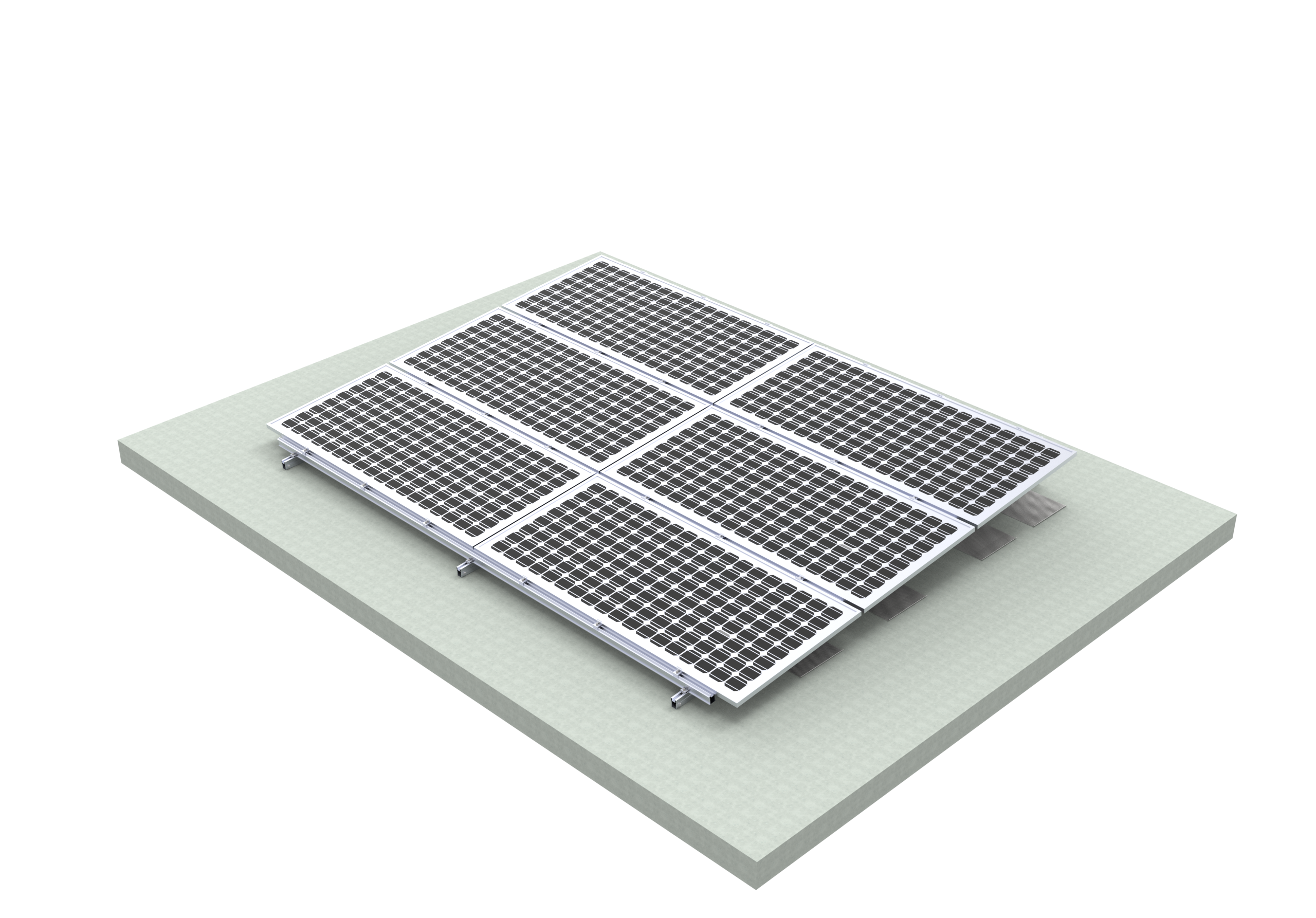
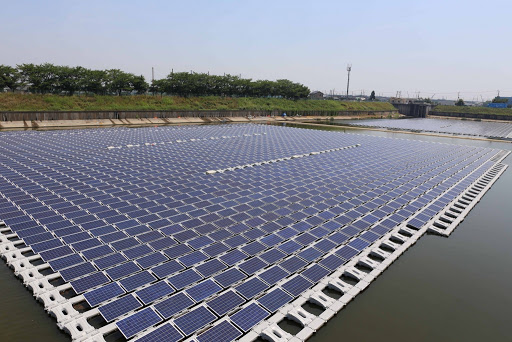
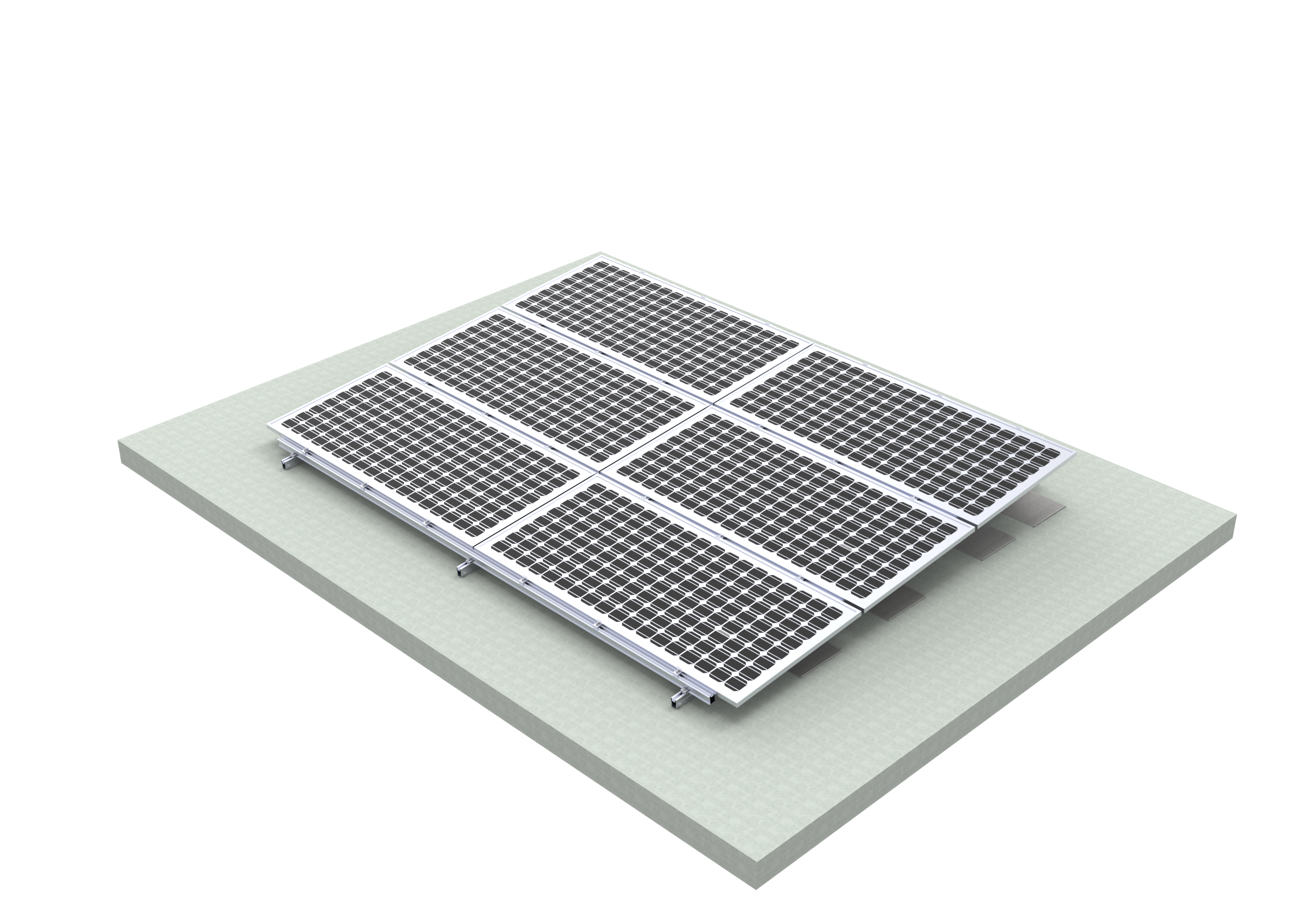
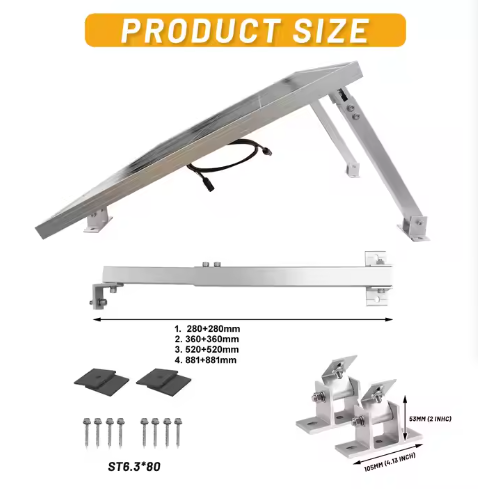
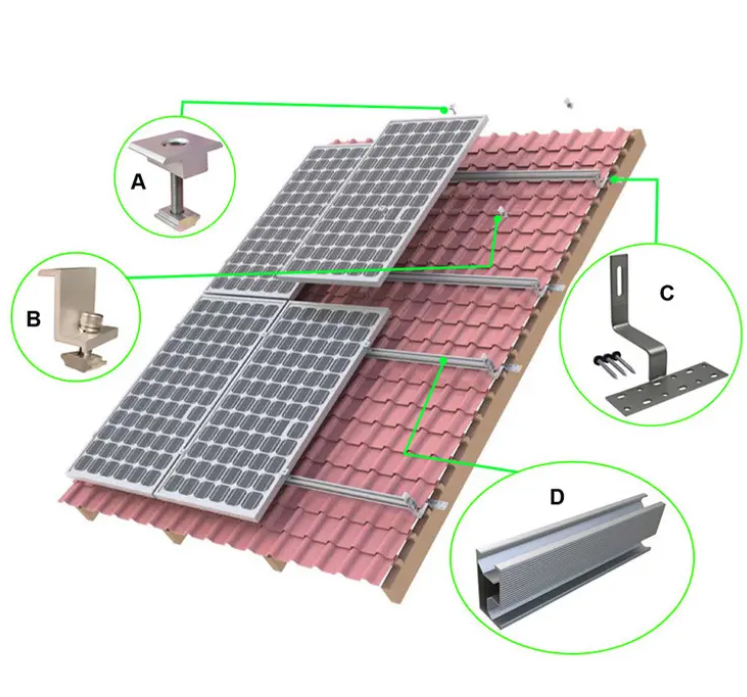
According to the "In depth Research and Development Prospect Forecast Report on the Current Status of China's Photovoltaic Bracket Industry (2025-2032)" released by Guanyan Report Network, photovoltaic brackets are special functional brackets used to install, support, and fix photovoltaic modules in photovoltaic power generation systems. They are also important auxiliary materials in the photovoltaic industry chain, and their performance directly affects the power generation efficiency and investment returns of photovoltaic power plants. In recent years, with the promotion of the "dual carbon" strategy and the implementation of policies such as the "Notice on Promoting the Coordinated Development of the Photovoltaic Industry Chain and Supply Chain", China's photovoltaic industry has developed rapidly, with new and cumulative installed capacity continuously increasing, bringing strong growth momentum and broad market space to the development of the photovoltaic bracket industry.
Data shows that China's newly installed photovoltaic capacity has increased from 30.1GW in 2019 to 277.17GW in 2024, with an average annual compound growth rate of 55.90%; From January to May 2025, its newly installed capacity experienced explosive growth, reaching 197.85GW, an increase of 149.97% compared to the same period last year. Among them, the newly installed capacity in May was 92.92GW, a year-on-year increase of 388.03%. In addition, as of the end of May 2025, China's cumulative installed capacity of photovoltaics has reached 1084.45 GW, breaking through the 1TW mark for the first time.
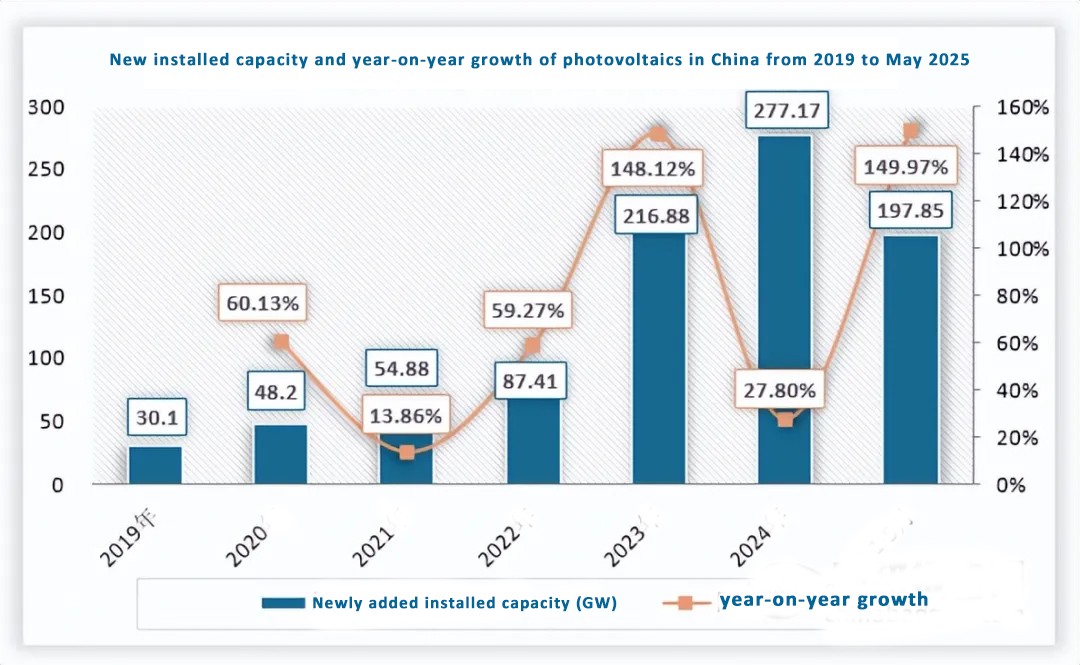
Data source: National Energy Administration, etc., compiled by Guanyan Tianxia
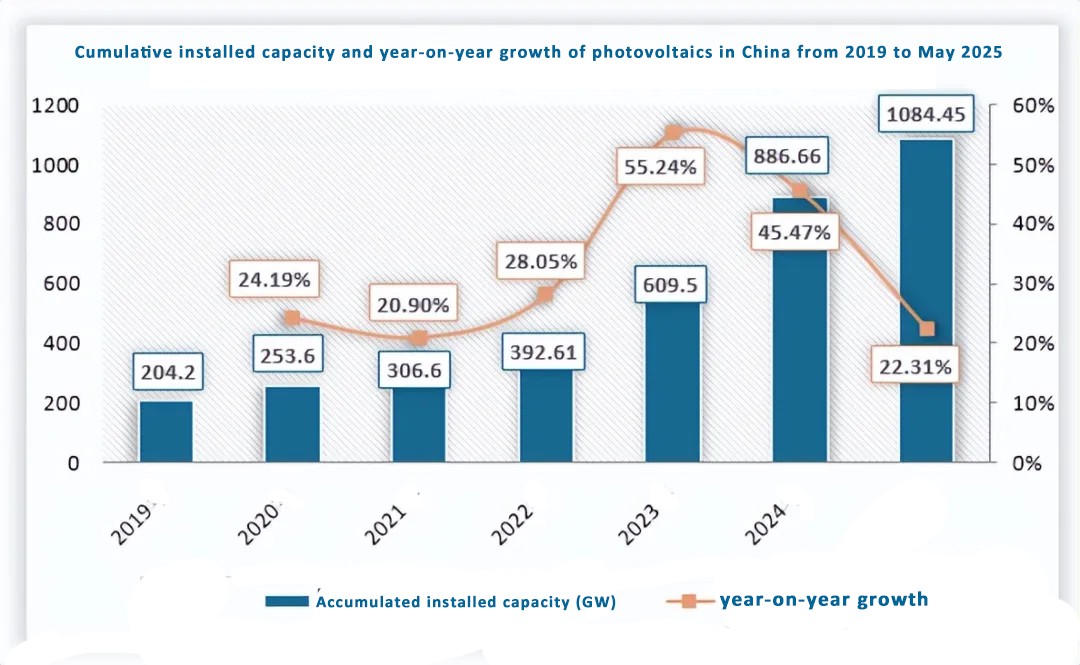
Data source: National Energy Administration, etc., compiled by Guanyan Tianxia
2. Fixed brackets are mainstream products, with low penetration rate of tracking brackets and greater development potential
According to whether they can automatically follow the rotation of the sun, photovoltaic brackets in China are mainly divided into fixed brackets and tracking brackets. The fixed bracket needs to be manually adjusted for angle based on seasonal changes and lighting conditions; And the tracking bracket can automatically adjust the direction, which can significantly improve the power generation efficiency. At present, fixed brackets are still the mainstream products in China's photovoltaic bracket market. Tracking brackets are subject to multiple factors such as market inertia, technological maturity, terrain adaptability, and initial investment costs, resulting in significantly low penetration rates and greater potential for future development.
Comparison between tracking bracket and fixed bracket
| project | tracking mount | fixed bracket |
| compose | It mainly consists of three parts: structural system, driving system, and control system | The main components include columns, main beams, bars, foundations, etc. |
| characteristic | Real time tracking of the sun's position, actively adjusting the orientation of photovoltaic modules to maximize the utilization of solar radiation, thereby increasing power generation and achieving higher power generation revenue. | The fixed bracket is generally installed at the angle that maximizes solar radiation throughout the year as the installation angle for photovoltaic modules, which cannot be adjusted or requires seasonal manual adjustment. |
| advantage | Real time adjustment of component angles can maximize the capture of solar radiation, significantly improving power generation efficiency; Has strong adaptability to different scenarios; High safety, in the event of extreme strong wind weather, the tracking bracket tests the local wind force through sensors, adjusts the appropriate angle to reduce the wind area of the photovoltaic modules, and reduces the risk of photovoltaic module damage | Low maintenance requirements, simple structure, and low cost |
| disadvantage | The manufacturing cost of the product is high, the maintenance difficulty is high, and the installation is complex | The power generation efficiency is relatively low, and there is room for improvement。 |
Data source: Public information, compiled by Guanyan Tianxia
Data shows that as of the end of 2023, the penetration rate of tracking stents in China is about 5.3%, far below the global average of over 40%, and the gap is more significant compared to the penetration rate of over 80% in the US market. Looking ahead to the future, driven by multiple factors such as the continuous promotion of photovoltaic grid parity, the increasing demand for refined operation of power stations, the accelerated application of intelligent photovoltaic technology, and the cost reduction brought about by the maturity of tracking bracket technology, China's tracking bracket will accelerate the replacement of traditional fixed brackets, and the market penetration rate is expected to continue to increase.
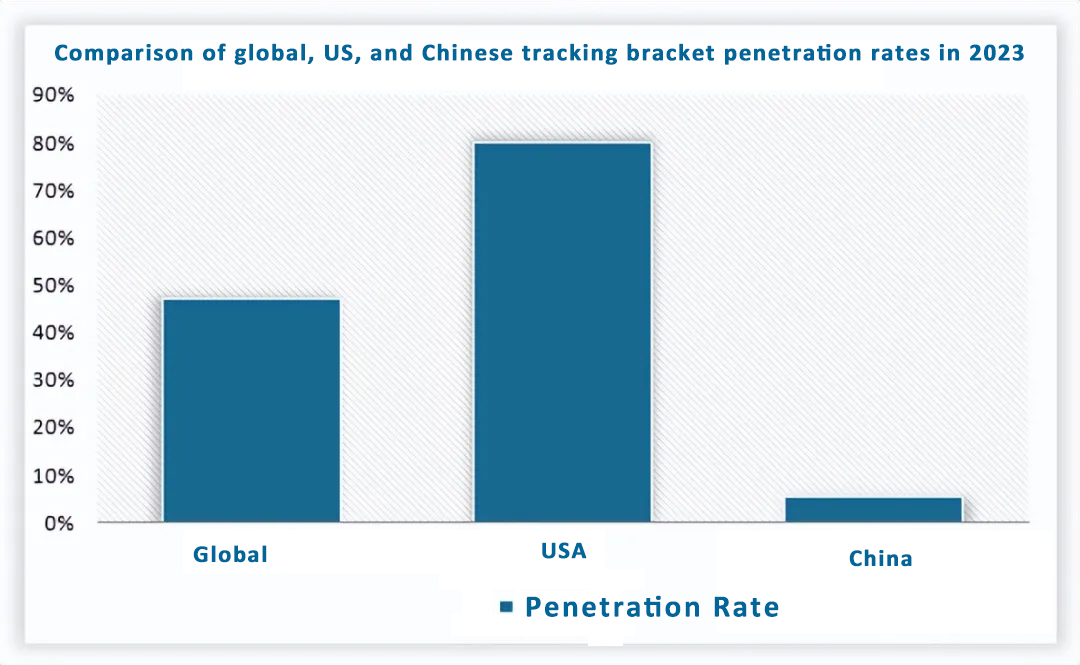
Data sources: CPIA, IHS Markit, and Guanyan Tianxia
Driving factors for the increase in penetration rate of future tracking brackets
| driving factors | Core impact |
| Continuous promotion of photovoltaic grid parity | The sensitivity of power plant investors to power generation efficiency has increased, and their requirements for investment returns continue to rise, which has led to more market favor for tracking brackets with more advantageous power generation efficiency. |
| The demand for refined operation of power stations is increasing | With the shift of power plant management from extensive to lean, the industry's awareness of cost per kilowatt hour (LCOE) has significantly increased. In this context, tracking brackets can directly optimize the power plant revenue model by effectively increasing power generation, thereby continuously improving market acceptance. |
| Accelerating the application of intelligent photovoltaic technology | AI algorithms optimize tracking paths, remote monitoring of the Internet of Things, and other technological applications to improve the reliability of tracking brackets and reduce operational complexity, further increasing their market acceptance. |
| Mature tracking bracket technology brings cost reduction | With the continuous maturity of tracking bracket technology and the gradual emergence of economies of scale, combined with factors such as product design optimization and material upgrades, cost reduction is being driven, narrowing the initial investment gap with fixed brackets and creating favorable conditions for increasing market penetration. |
Data source: Public information, compiled by Guanyan Tianxia
3. Photovoltaic bracket companies actively expand overseas markets
In recent years, against the backdrop of accelerated global energy transformation, with the announcement of carbon neutrality targets by multiple countries and regions such as the European Union, the Middle East, and Southeast Asia, coupled with the continuous deepening of China's global layout of the photovoltaic industry chain, many photovoltaic support companies such as Zhenjiang Co., Ltd., Youli Intelligent, Zhongxinbo, Qingyuan Technology, and Tianhe Solar have actively expanded their overseas markets. Among them, Zhenjiang Group continues to promote overseas production capacity construction. In 2024, the construction of the US photovoltaic bracket factory will be completed, and the Saudi photovoltaic bracket factory is in the production and commissioning stage; Zhongxinbo has currently established overseas subsidiaries such as Zhongxinbo in South Africa, Zhongxinbo in Spain, and Zhongxinbo in the United Arab Emirates. At the same time, it has laid out three major overseas production and manufacturing bases in Gujarat, India, Jeddah, Saudi Arabia, and Bahia, Brazil, building a global supply chain network; Qingyuan Technology has established overseas branches in Australia, Germany, the United Kingdom, Japan, Thailand, and the Philippines, deploying local sales and technical support teams.