
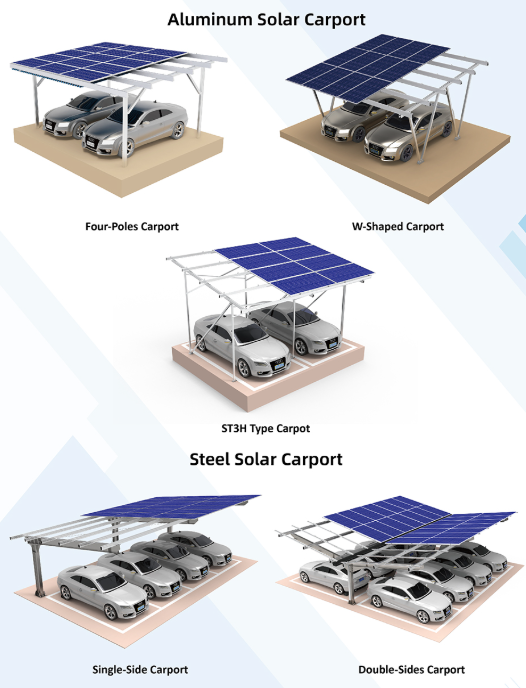
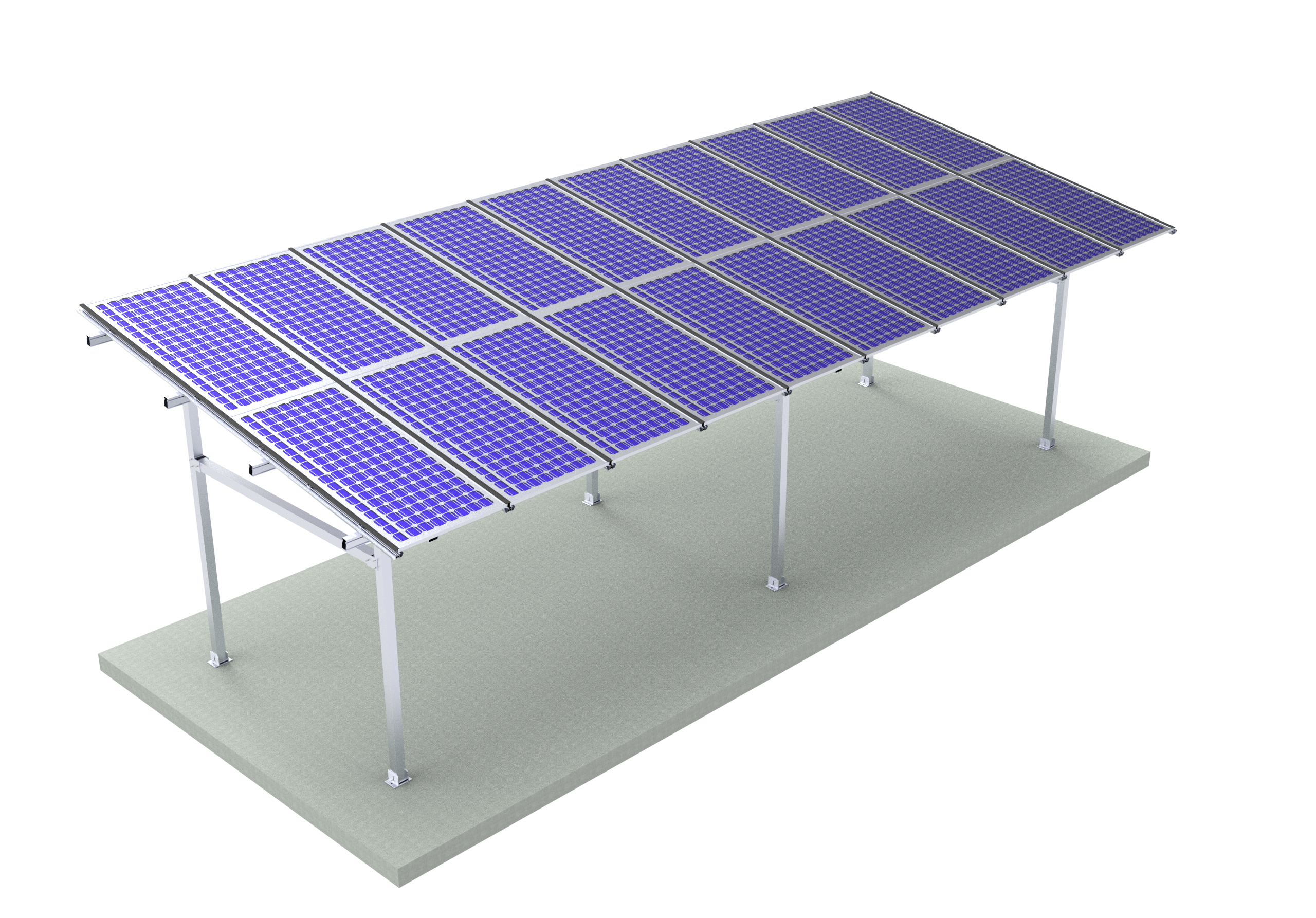
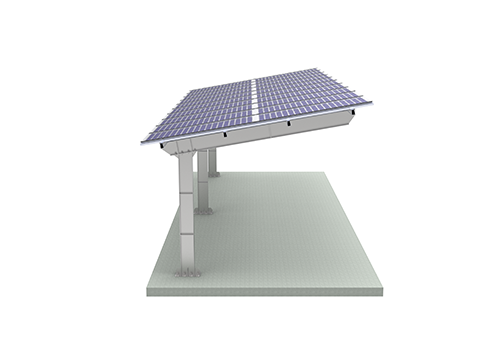
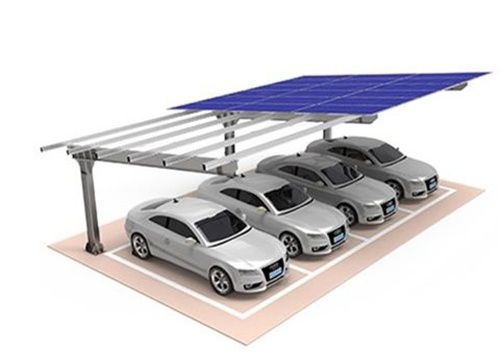
Steel Solar Carport Mounting Structures
primary functions are:
A decentralized power plant
Providing shade and shelter for vehicles, reducing interior temperatures and weather-related wear.
Generating value from otherwise single-use asphalt.
Acting as a node for distributed energy resources.
Materials: Typically uses ASTM A992 steel for beams/columns (high strength, good weldability) and A500 for hollow structural sections (HSS). The steel is hot-dip galvanized (HDG) to ASTM A123 standards, providing a zinc coating of 3-6 mils for decades of corrosion resistance.
Optimize material use, reducing weight and cost while maintaining strength where needed.
Pre-fabricated components allow for faster, more precise field assembly, reducing on-site welding and labor costs.
Minimize ground footprint, maximizing parking space flexibility and vehicle maneuverability.
Steel purlins and beams are often designed with integrated raceways or clips for UL-listed cable management, protecting wiring and streamlining installation.
The robust electrical infrastructure can be designed to accommodate future V2G technology, where parked electric vehicles can feed power back to the building or grid during peak demand.
The business case for a steel solar carport is built on multiple revenue streams and cost avoidances
Powers offices, shades employee vehicles, supports workplace EV charging. Enhances corporate ESG (Environmental, Social, and Governance) profile.
Powers stores, attracts eco-conscious customers, provides customer comfort. Massive, flat parking lots are ideal for scale.
For university parking lots. Serves as a living lab for engineering and environmental studies, while providing shaded parking for students and staff.
Powers terminals and charges ground support equipment (GSE) and electric fleet vehicles
For structural and electrical permits.
The steel solar carport is evolving into the "Energy & Mobility Hub." Future iterations will seamlessly integrate
In conclusion, a steel solar carport is a premium, long-term infrastructure investment. Its higher initial cost is justified by its unparalleled durability, safety, and capacity to serve as the foundational platform for a site's electrification and decarbonization strategy for decades to come. It transforms a cost center (a parking lot) and a liability (an energy bill) into a revenue-generating, future-proof asset.